The Second Camera at the First Read: How 2026 Turned the Table Read Into a Content Shoot
Photo: GordonGlottal, CC0, via Wikimedia Commons
The table read used to be a closed door. Cast, producers, a few writers, maybe a network exec who flew in. Phones down. Scripts up. The first laugh was for the room. In 2026, that door is open a crack, and there is a camera in the corner.
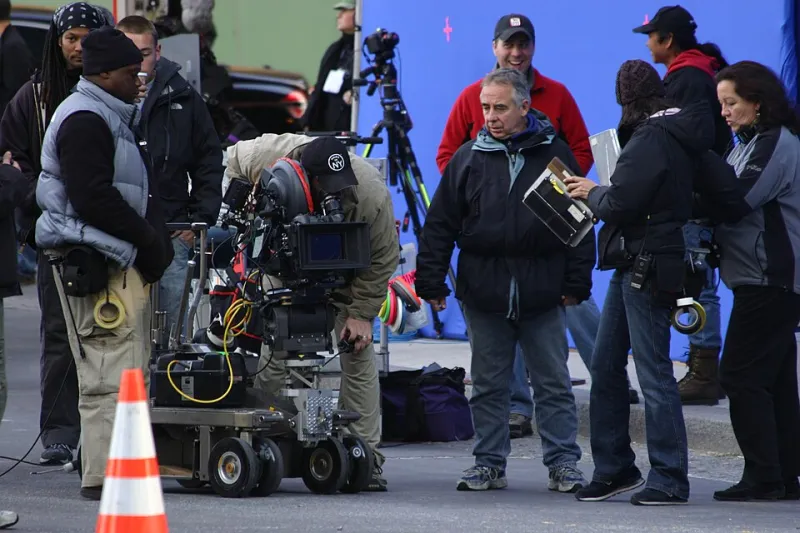
Not a full production shoot. Not a behind-the-scenes crew trailing everyone. More like a small content capture team that arrives before call time, sets two cameras and a couple of lavs, and rolls on the parts that marketing can use. The read-through still happens. It just happens with an audience that will never be in the room.
Producers call it a content day. Publicists call it a mini junket. Actors call it something else, depending on what their contract says.
The Room With Two Audiences
The first read has always been a stress test for a script. You hear what lands and what dies. You watch the cast find each other. You learn which joke is too long and which scene needs a page-one rewrite before lunch.
Now it is also a content shoot. A line producer on a mid-budget drama told CSN Media that her show set aside a five-figure sum for what the call sheet lists as 'read-through capture.' That covers a two-person crew, a small lighting package, release forms at check-in, and a same-day edit for social. The deliverable is not a polished feature. It is a handful of vertical clips: the first laugh, a cast reaction, a writer hearing a line get a bigger response than expected.
The value is not in the footage itself. It is in the timing. Marketing gets assets before the show has a trailer, before the press tour, before anyone has seen a frame. A first-laugh clip can travel further than a teaser because it feels like access. It feels like the moment before the thing becomes a thing.
What the Call Sheet Says Now
A 2026 read-through call sheet often includes a block that did not exist a few years ago: content capture, 30 minutes, cast and producers only. The camera operator is told not to cross the eyeline. The sound mixer is told to get room tone before the room fills up. The publicist is told which three moments are likely to be clipped.
Actors arrive to find a release form clipped to their script. The form is not the same as a standard appearance release. It usually covers the read-through footage specifically, including the right to cut it for social, the right to use it in a sizzle reel, and the right to hold it until a certain date. Some actors negotiate approval over which clips go out. Some ask for no close-ups during a particularly raw scene. Some want the option to see the cut before it posts.
'It is not the Wild West anymore,' a talent lawyer who works on scripted series said. 'The first year or two, productions were just putting cameras in the room and figuring out the paperwork later. Now the paperwork is the first conversation.'
The Publicist's New Junket
For publicists, the filmed read-through solves a problem that has been getting worse every year: how to get press and fans interested in a show before there is anything to show. Traditional junkets are expensive and exhausting. Talent flies in, sits in a hotel room, answers the same five questions, flies out. A read-through gives the publicity team something different: a room full of faces, a script in hand, and the sound of a joke landing for the first time.
The social team cuts the footage into vertical clips before the read is even over. The press team uses the same assets to pitch first-look stories. The talent team uses the clips to tease the cast on their own accounts. Everyone gets something. The read-through becomes a mini press junket that happens before the show has a press cycle.
There is a risk in that. If every show posts a messy first laugh, the messy first laugh stops feeling special. Audiences are good at spotting a moment that exists mostly to be clipped. The read-through only works as marketing if it still feels like a read-through.
The Actor's Calculus
For actors, the calculus is more personal. A table read is vulnerable. You are not in costume. You are not on a set. You are sitting at a folding table with a script you may have read once, trying to find a character in front of people who hired you. The camera changes the room, even when everyone says it does not.
Some actors like the control. They get to show their work early, on their terms, in a setting that is closer to theater than to film. Others feel the pressure of performing for two audiences at once: the room and the cut. A young lead on a streaming comedy said she asked for the camera to stay wide during her first scene. 'I do not need my first attempt at a joke living on the internet forever,' she said.
The compromise most productions land on is simple: cameras roll on the read, but not on every moment. The content team gets a bounded window. Actors get a review period. Publicists get a set of approved clips. It is not a perfect system, but it is a system.
The Craft Question Nobody Wants to Ask
There is a craft question underneath all of this. A table read has its own sound. Pages turning. Chairs creaking. Someone laughing in the back. The room is the instrument. When you put a camera in it, you start to treat that instrument differently. You ask people to sit closer. You ask for quieter page turns. You ask the writer not to react too loudly because the lav will pick it up.
None of that is fatal. But it changes the thing being captured. The best content teams know this. They keep the footprint small. They do not light the room like a set. They do not ask for a second take of the first laugh.
'My job is to be invisible until the read is over,' one read-through camera operator said. 'If the cast forgets I am there, I got what I needed.'
What the Door Being Open Actually Costs
By the time the read-through ends in 2026, the content team has a card of footage, the publicist has a shortlist of moments, and the actors have a new line item in their contracts. The show has something it did not have before: proof that the room worked.
But the read-through used to be the one place where a show could fail privately. A joke could die. A scene could collapse. Everyone could learn from it without anyone watching. That privacy had value, even if nobody put it in a budget.
The filmed read-through is not going away. The marketing math is too good, and the audience appetite for access is too strong. The question is not whether the cameras stay. It is whether the room can still be a room when everyone knows the door is open.
For now, the answer is yes, mostly. The first laugh still sounds like a first laugh. The pages still turn. The camera still rolls. And the publicist still gets the clip before lunch.