The Ghost First Unit: Why 2026’s Biggest Shows Are Shooting the Episode in a Headset First

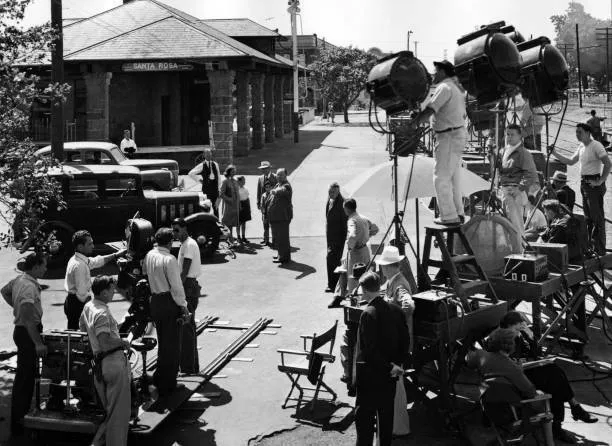
Photo: film previsualization virtual reality headset production studio 2026, via fr.web.img6.acsta.net
There’s a version of the episode that exists before anyone calls “action.” It lives on a hard drive in a room with blackout curtains, and it has already been shot, cut, and argued over. In 2026, that version — the previsualized episode — is no longer a nice-to-have. On the biggest productions, it’s the first unit nobody puts on the call sheet.
“We’re not drawing anymore,” says Marisol Vega, a previs supervisor who spent the spring building a eight-episode sci-fi run for a streaming service. “We’re directing a parallel production. The director shows up and the show is already there.”
That shift is the story of the year in production circles. Previs departments — once a quiet corner of the VFX pipeline — have become the place where shots get locked, budgets get tested, and a lot of on-set fights get pre-resolved. Studios are betting that a second, digital version of the episode saves money and headaches later. The crews living through it are still figuring out what that means for the hierarchy.
From stick figures to a playable set
The tech is the easy part to explain. Game-engine pipelines, VR scouting, and real-time lighting have collapsed the distance between a sketch and a shot. A previs team can now build a location, drop in a digital double, and shoot coverage from six angles before a location manager has even pulled the permit.
“We scout in headsets now,” says Danny Okafor, who runs previs on a network drama shooting in Atlanta. “The director puts on a VR set and walks the room. They see the window light at 4 p.m. They see where the couch blocks the door. We make those decisions in a conference room in Burbank, and then we hand the real crew a shot list that already survived a week of arguments.”
That’s the pitch. The reality is messier. Previs teams are now asked to deliver what amounts to a full animatic cut of each episode — not just the big VFX sequences, but the kitchen-table scenes, the hallway walk-and-talks, the comedy beats. If it’s in the script, it’s in the previs.
The three supervisors who are quietly directing your favorite shows
Vega, Okafor, and Priya Raman — a previs lead on a half-hour comedy — represent three different flavors of the same job. Vega’s team works like a miniature animation studio, with modelers, riggers, and a shot designer who sits in on tone meetings. Okafor’s crew is leaner, built around a real-time engine and a single VR scout who travels to set to keep the digital and physical worlds aligned. Raman’s comedy team is the newest wrinkle: they previs jokes.
“Comedy is timing, and timing is cuts,” Raman says. “We build the episode with placeholder performances, we watch it with a live audience of six people in a dark room, and we find out which joke dies before we pay for a set. That’s not storyboarding. That’s a table read with a camera.”
All three describe the same tension: previs supervisors are making creative calls that used to belong to directors, DPs, and showrunners. Sometimes that’s welcome. Sometimes it’s a cold war.
The new on-set hierarchy
“The director is still the director,” Okafor says carefully. “But the director is now walking onto a set where the shot is already locked in a file. If they want to change it, they’re not just changing their mind — they’re changing a pipeline.”
That friction shows up in small ways. A DP who wants to move a camera finds out the previs has already established the room’s geography for a later VFX shot. An AD who plans a company move discovers the previs team built the schedule around a digital set that doesn’t match the practical location. A showrunner who wants to rewrite a scene on the day learns the animatic has already been delivered to the studio for approval.
“We’re not trying to take over,” Vega says. “We’re trying to de-risk. But de-risking means somebody has to make a call early. That used to be the director on the day. Now it’s a room full of artists three weeks out.”
Some productions are handling it by putting the previs supervisor in the tone meeting and the production meeting — a seat at the table that didn’t exist five years ago. Others are still treating previs like a vendor, which is where the resentments start.
The studio math
The money argument is straightforward. A locked animatic catches script problems, location problems, and scheduling problems before they become expensive. Studios can see the episode before they pay for the episode. For a show with heavy VFX, the savings can be enormous. For a comedy, the savings are subtler but real: fewer wasted set days, fewer “we’ll fix it in post” cuts that never get fixed.
“The second version of the episode is cheaper than the first version,” says one production executive at a mid-size studio, who asked not to be named because they weren’t authorized to discuss budgets. “We’re not replacing the director. We’re buying a rehearsal. The previs is the rehearsal.”
That rehearsal is now being scheduled like a real shoot. Previs teams block out weeks, not days. They have their own call sheets. They have their own overtime. And in 2026, they have their own credit conversations — because the artists building the episode are starting to ask why their names aren’t on it.
What the crew sees
On set, the previs file is both a gift and a ghost. It answers questions. It also hovers. A camera operator who wants to improvise a move knows there’s a digital version of the scene that already made that choice. A gaffer who wants to change a lighting setup knows the previs has already solved the window. The episode has been shot twice — once in a headset, once on a stage — and the second one has to live up to the first.
“The best directors use it as a tool,” Raman says. “The worst ones treat it like a cage. And the smart ones know the cage is only as strong as the conversation that built it.”
For now, the previs boom shows no sign of slowing. The shows are getting bigger, the schedules are getting tighter, and the digital episode is getting better. The question isn’t whether the episode you see twice is here to stay. It’s whether the people making the first version finally get treated like a first unit.