The $40 Painting That Ate the Distribution Deal: Inside 2026’s Background-Art Clearance Desk
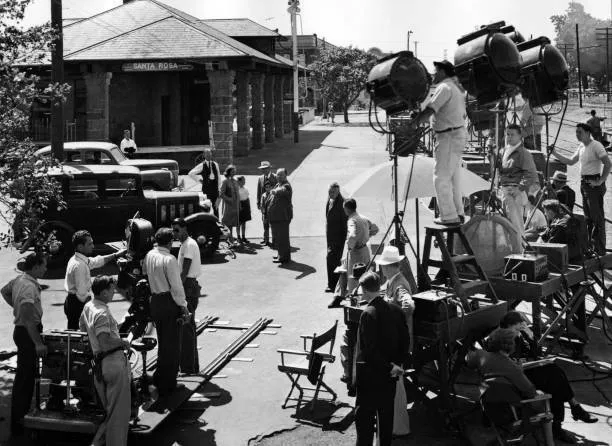
Photo: Skirball Productions, Universal Pictures, Public domain, via Wikimedia Commons
On a Tuesday in early 2026, a production office in Atlanta got the kind of email nobody puts on a call sheet. Legal wanted to talk about a painting. Not a hero prop. Not a signature piece built by the art department. A $40 landscape bought at a thrift store, hung in a character’s hallway, and visible for maybe eleven seconds in the second episode.
The painting had already done its job. The scene had been shot, cut, color-corrected, and delivered. Then a distributor started prepping an international sale, and someone in the chain asked the question that has become a small industry of its own: where did that art come from, and can we prove it?
Welcome to the background-art clearance desk, where the least glamorous objects on set can generate the longest paper trail.
The Freeze-Frame Is the New Close-Up
For years, background dressing lived in a comfortable gray zone. If it was soft in the frame, it was probably fine. A poster was a poster. A cereal box was a cereal box. A painting was texture.
Streaming changed the math. Viewers pause. They screenshot. They post. A 4K frame can turn a blurry album cover into a recognizable album cover in about four clicks. Fan accounts catalog set details the way sports fans catalog jersey numbers. By 2026, clearance coordinators are not just reviewing set photos; they are reviewing final frames, sometimes at the exact timestamp where a background object becomes legible.
The result is a strange reversal. The foreground is no longer the only place a story can get into trouble. The wall behind the actor is part of the distribution package now.
What ‘Cleared’ Actually Means
‘Cleared’ is one of those production words that sounds final and is almost never final. A background object can raise a copyright question, a trademark question, a trade-dress question, a right-of-publicity question, or all of the above. A band poster might be fine as set dressing in one context and a problem if the show makes the band look like a sponsor. A cereal box might be acceptable if the label is turned, but not if the turn looks like a deliberate visual gag in a close-up.
Clearance coordinators describe their job as less about saying no and more about asking ‘cleared for what, where, and how long?’ A piece of art might be fine for a US streaming window and riskier for a international sale. A reproduction might be fine on screen but not in marketing materials. A thrift-store find might be an orphan work—no identifiable rights holder, no clean chain of title—which is its own kind of headache.
CSN Media spoke with a clearance coordinator in Los Angeles who put it plainly: the goal is not to make sets boring. The goal is to make the boring parts survive the frame.
The Red-Flag Walk
The best time to catch a background-art problem is before it becomes background art. That means a walk-through, not a vibe check. Art department leads in 2026 increasingly do a ‘red-flag walk’ before install: phone in hand, every item photographed, every source noted, every receipt saved.
The short list of things that get a second look is not complicated. Anything with a logo. Anything with a face. Anything with a signature. Anything that reads as a lyric, a title, or a brand. A generic landscape is usually safer than a recognizable album cover. A frame from a stock site is usually easier to document than a flea-market original. A cereal box can be turned, but the turn should be motivated by the scene, not by a last-minute panic.
New crew members sometimes assume that clearance is somebody else’s job. In practice, the art PA who bought the poster is often the only person who knows where it came from. If that information is not captured on the day, it becomes a small archaeological project later.
Why International Sales Change the Math
A show can play cleanly on a US streamer and still trip in another market. Fair use and fair dealing are not universal get-out-of-jail cards. Moral rights can matter. Trademark rules vary. A background use that feels incidental in one territory can feel promotional in another.
That is why clearance conversations now happen earlier, sometimes at the concept stage. Sales teams want clean materials. Legal wants fewer surprises. Post-production wants to avoid blurring or replacing an object after the edit has locked, because that work is slow, expensive, and always looks a little worse than getting it right on set.
The $40 painting lesson is not that every set should be filled with generic art. It is that the cheap object can carry an expensive question.
The Paper Trail Is Set Dressing
Clearance coordinators are not the art department’s enemy. They are the people who keep the wall from becoming a liability. The best desks get involved early, review mood boards, flag risky hero background, and suggest clean alternates before anyone falls in love with a poster.
A 2026 trend that art leads mention: clearance tags on the back of frames, color-coded by risk. Green for documented stock or original art with a release. Yellow for items that need a second look. Red for anything with a logo, a face, or an unclear source. It is not glamorous. It is not visual. But it is the kind of production craft that keeps a show out of a legal memo.
What New Crew Should Say Out Loud
If you are new to set and you are handed a nail gun, a poster, and a wall, here are the sentences that save time later:
- ‘I don’t know where this came from.’ That is not an admission of failure. It is a prompt to document.
- ‘This has a logo.’ Say it before it goes up, not after it is in a frame.
- ‘This looks like a real person.’ Likeness is its own clearance lane.
- ‘This is a reproduction.’ Reproductions can be trickier than originals because the rights chain is often murkier.
- ‘Can we get a clean alternate?’ Often the answer is yes, and the cost is a trip to the prop house, not a post-production fix.
The poster on the wall is part of the story now—whether the story is on screen or in the clearance file. The sets that survive 2026 are not the ones with the most stuff. They are the ones where somebody asked the boring question before the camera rolled.