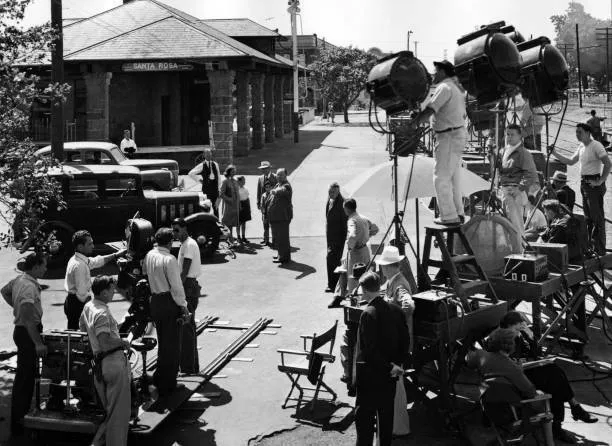
The Last Loop: Why 2026 Crews Are Touring the Set After “That’s a Wrap”
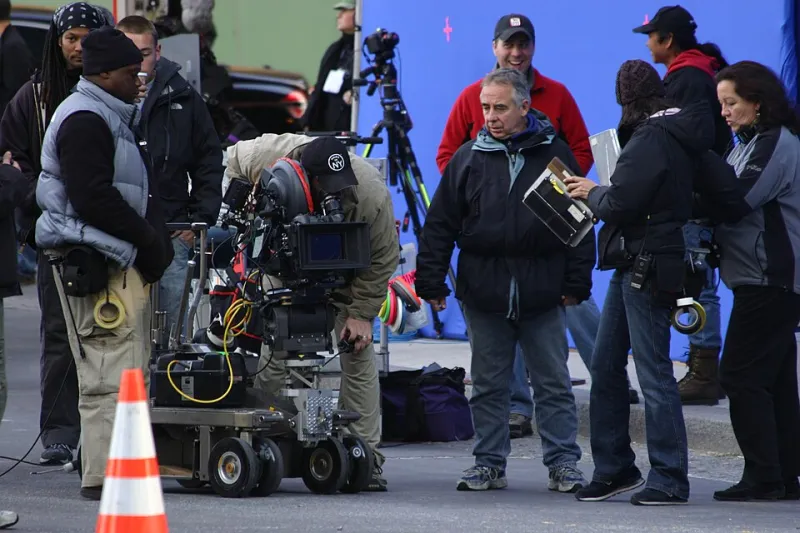
Photo: grendelkhan, CC BY-SA 2.0, via Wikimedia Commons
At 7:52 on a Thursday night in October, the stage didn’t empty. The last shot—a two-page dialogue scene in a fake kitchen—had wrapped at 7:40. By 7:45, the director and first AD were gone. But the gaffer, the prop master, the set decorator, the key grip, and the locations manager were still walking the floor, phone flashlights up, moving in a loose line like people looking for a lost earring.
That’s the wrap walk: a ten-to-fifteen-minute end-of-day tour of the set, run by department heads, after the crew has been released but before the last van leaves. It’s not a safety meeting. It’s not a production meeting. It’s a look-around with a clipboard and a shared sense that tomorrow morning is going to be somebody’s problem if nobody looks now.
On this Atlanta-based half-hour comedy—the production asked not to be named while its season is still shooting—the walk has been happening every day for six weeks. It started as a pandemic-era habit, got formalized when the show’s insurance broker asked for a daily hazard log, and now it’s on the call sheet as a standing item: “WRAP WALK — DEPT HEADS, 10 MIN.”
The Ten Minutes Nobody Budgeted
The walk isn’t glamorous. On Monday, the prop master found a half-empty water bottle sweating onto a vintage radio that had been rented for $1,200. On Tuesday, the gaffer flagged a cable run that had been taped down with the wrong tape—the kind that leaves residue on a hardwood floor the set dec team had spent two days aging. On Wednesday, the locations manager noticed that a door to an offstage hallway had been propped open with a sandbag, creating a fire-code issue that would have been a real problem if the fire marshal had shown up before call.
None of these are dramatic. All of them are expensive if you find them at 6:45 the next morning, with 80 people standing around waiting for a fix.
“The walk is about protecting the first hour,” says the show’s first AD, who has run walks on three productions this year. “If we start the day with a ten-minute problem, we’ve already lost the morning. If we catch it at night, it’s a five-minute note to the right person and nobody’s day gets wrecked.”
Why the Walk Is Spreading Now
2026 schedules are tight in a way that has changed the math on end-of-day rituals. Streamers are ordering fewer episodes but expecting the same polish. Insurance paperwork has grown—daily hazard logs, equipment condition reports, and location-release documentation are now standard on mid-budget shows. And crews are more likely to be working with a mix of local hires and traveling department heads who don’t share the same institutional memory about a stage’s quirks.
The walk solves a few problems at once. It gives the production a paper trail. It gives department heads a chance to talk to each other without a producer standing over them. And it gives the next morning a clean start.
On this show, the walk has also become a quiet continuity tool. The script supervisor doesn’t always join, but the set decorator takes phone photos of anything that moved during the day—a chair shifted for a camera angle, a rug pulled back for a dolly track, a practical lamp that got swapped for a different bulb. Those photos go into a shared folder before the walk ends. The next morning, the set is reset before the cast arrives.
One Week, Five Walks
On Monday, the walk took 12 minutes. The biggest catch was a cracked outlet cover behind a console table. The gaffer taped it off and texted the stage manager. Done.
Tuesday’s walk ran 18 minutes because the production had shot a night scene in a practical location—a diner outside the perimeter—and the walk included the parking lot. The locations manager found a catering table that hadn’t been broken down and a stack of call sheets blowing toward a storm drain. The walk ended with two people chasing paper across asphalt. Not glamorous. Still cheaper than a complaint from the diner’s owner.
Wednesday was the hardwood-floor tape issue. The set dec team stayed an extra ten minutes to lift the residue with a steamer. The walk became a small negotiation: who pays for the extra time? The answer, in this case, was nobody—the gaffer had tape in his kit that wouldn’t have left residue, and the fix was a lesson, not a line item.
Thursday’s walk was the longest at 22 minutes. A rental company had delivered a hero prop in the wrong color, and the prop master wanted eyes on it before it went back into the case. The walk turned into a five-person huddle about whether to repaint, re-rent, or write it into the scene as a different object. They decided to repaint. The walk ended with a plan and a text to the art director.
Friday’s walk was eight minutes. Nothing broke. Nobody found anything. That’s the goal.
The Insurance Angle
The walk isn’t just a crew habit anymore. On this production, the daily hazard log is part of the insurance file. The line producer keeps a shared document with timestamps and photos. It’s not a legal document in the way a incident report is, but it’s evidence that the production is paying attention.
“Carriers don’t ask for a walk,” says a Los Angeles-based production insurance broker who works on unscripted and scripted shows. “But they do ask for documentation of routine safety inspections. A daily walk with a log is a cheap way to show you’re not winging it. When a claim happens, the first question is always, ‘What did you know, and when did you know it?’ A walk log answers that.”
The broker also points out that the walk can reduce small claims—the kind that don’t seem worth reporting but add up. A scratched floor, a missing prop, a damaged practical. If you catch it the night before, you can often fix it without a claim. If you catch it three days later, you’re filing paperwork.
The First Hour Is the Whole Point
The show’s line producer puts it more bluntly: “The walk is about not paying overtime for a problem that could have been solved at straight time.”
That math is simple. If a department head finds a problem at 7:55 p.m., they can often solve it with one text and a five-minute fix. If they find it at 6:55 a.m., they’re solving it with a crew that’s already on the clock, a cast that’s waiting, and a director who’s watching the sun move.
The walk also protects the mood of the set. A morning that starts with a scavenger hunt is a morning that starts tense. A morning that starts with everything in place is a morning that starts with a joke and a coffee. That’s not a small thing on a six-week shoot.
How to Run a Walk That Works
The productions that do this well tend to follow a few rules. Keep it short—ten to fifteen minutes, max. Keep it to department heads and the first AD, not the whole crew. Give people a clear list of what to look for: hazards, continuity, security, and anything that belongs to a rental house. Take photos. Log the time. End with a two-minute huddle where each department says one thing they need fixed before call.
And don’t turn it into a notes session. The walk is not the place to re-litigate the day’s creative choices. It’s the place to make sure the next morning doesn’t start with a problem.
The show’s gaffer has a simpler rule: “If you see something, say something before you get in your car. After that, it’s tomorrow’s problem.”
The Cost of Skipping It
Not every production walks. Some shows are too small, some stages are too locked down, some crews just want to go home. But the productions that have adopted the walk tend to keep it. The cost is ten minutes of department-head time. The benefit is a cleaner start, a lighter insurance file, and a crew that knows somebody is paying attention.
On this Atlanta stage, the walk ended at 8:04 p.m. on Thursday. The gaffer killed the last work light. The prop master locked the hero cabinet. The locations manager checked the door one more time. Then they all walked out together, past the craft table, past the empty chairs, into a parking lot that was already half full of taillights.
Friday morning, call was 7 a.m. The set was ready. Nobody had to chase a problem. The first shot was up at 7:22. That’s the walk paying for itself, one quiet morning at a time.