Santa Is Sweating: The Arithmetic of Faking December Inside a 2026 Heat Dome
Photo: ESO, CC BY 4.0, via Wikimedia Commons
The forecast for the last week of August 2026 called for triple digits in the San Fernando Valley, which is precisely when the snow arrived. Eight thousand square feet of it, stacked on pallets inside Stage 12 in Burbank: cellulose fluff, paper flock, and a denser biodegradable foam the crew just calls "the heavy stuff," because it holds a boot print for about forty seconds before slumping into something that looks less like a village square and more like wet laundry.
On the call sheet, snow is listed under atmosphere. In the budget, it is a six-figure line with its own supervisor, its own truck, and its own set of arguments. The production is a two-hour holiday special — musical numbers, a celebrity Santa, a rebuilt small-town square, and a running time that has to land on a streaming platform and two broadcast windows before Thanksgiving. It airs November 28. It was shot over fourteen days in late summer, in a building whose air conditioning was never designed to fight a heat dome.
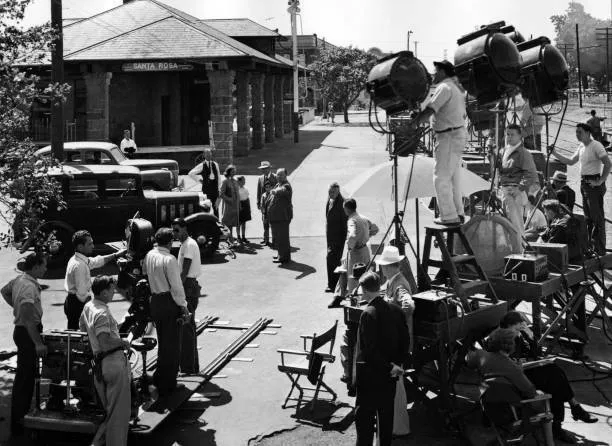
That gap between the calendar and the climate is the whole story of holiday television in 2026. Viewers treat the stuff as disposable background noise between football and dinner. The people who make it treat it as one of the most schedule-sensitive, technically fussy productions on the annual slate.
Why December Gets Built in August
Holiday programming has the least forgiving delivery calendar in the business. The air date is fixed by retail and advertising, not by anyone's creative readiness. Networks and streamers want finished masters in October so marketing can spin up promos, so international versions can be dubbed and localized, and so the inevitable round of legal and standards notes has somewhere to land.
Work backward from an October delivery and you get a shoot in July or August, a music lock in June, and a final mix in September. Every department inherits a deadline set by a date on a retail calendar that no one on set controls. "Nobody schedules a Christmas special around the weather," the show's line producer said during a break, fanning herself with a call sheet. "We schedule it around the delivery date. The weather is a problem we buy our way out of."
The Snow Line Item
Fake snow is not one product. It's a small industry.
Paper flock is cheap and photographs beautifully for wide shots, but it compacts, it migrates, and it tracks into every corner of the stage. Cellulose holds a shape longer and reads softer under LED, but it clumps when humidity climbs. The heavy foam is the continuity champ, and it costs accordingly. A snow supervisor on a special this size will spend the prep weeks testing blends on sample boards under the actual lighting rig, because snow that looks right under a warm key looks like shredded packing material under a cool one.
The hidden cost isn't the material — it's the maintenance. Footprints have to be erased between takes. Drifts have to be re-fluffed by hand. Every wide shot with a moving crowd becomes a reset problem, and every reset costs minutes. The show's snow crew runs a sweep-and-fluff pass at lunch and again after the last take, which is how a village square stays pristine for fourteen days instead of looking like a January parking lot by day three.
Then there's the fix in post. Because the sun outside the stage doors is brutal in August, some plates come back with shadows that read warm and long, and the VFX team ends up extending snowbanks past the practical edge, cooling the grade, and painting in breath vapor — because no actor in a 12-pound wool coat is producing visible cold breath in a Burbank heat wave, no matter how good they are.
Wool in a Heat Wave
The costume department's job is to build a winter silhouette around a summer body. Santa's suit is layered wool and faux fur, and the actor inside it is wearing a cooling vest with frozen inserts swapped out every twenty minutes by a dresser with a cooler and a stopwatch.
"We have six versions of the coat," the costume designer said. "One hero, two stunt, two 'wet' versions for the numbers, and one we call the sacrifice, because it's the one that takes the sweat and doesn't come back the same." Extras in period coats get timed breaks, misting stations, and electrolyte packets tucked next to the craft table. The AD team builds cooling holds into the shooting schedule the way other shows build in stunt rehearsals.
None of it shows on camera. That's the point.
Carols Are a Clearance Minefield
Every holiday special runs on a playlist, and every song on that playlist is a legal negotiation with a deadline. A standard like a beloved mid-century carol isn't a single permission — it's a sync license for the composition, a master-use license for the recording, and a split among publishers that can involve three or four parties and an estate. Some titles clear in days. Some take eight weeks. One producer described a last-minute swap on a previous special that cost more than the set's entire snow budget, and nobody in the room disagreed with the number.
The music for this show locked in June, months before a single flake hit the stage. The music supervisor keeps a spreadsheet color-coded by risk, and the red column — the songs that could torpedo a cut if a publisher balks — gets cleared first. Public-domain carols are the safety net, but even those come with arrangement copyrights, which is how a tune written in the 1800s ends up with a lawyer attached.
The Rituals That Keep the Set From Melting
The crew has rituals, and they are not decorative. The flake check before every take. The cooler of neck wraps that lives behind the monitor cart. The thermostat fight — the stage hitting 62 degrees wherever the cameras aren't pointing, so the actors can walk out of a 94-degree afternoon and into something that resembles the scene. The annual gag where someone hangs a paper calendar on the wall with all the December dates crossed out in red.
There's also the last-day gift exchange, held in the final hour of the final shoot day, in the fake snow, in August, with the village square already half-struck. It's a small thing. It's also the only moment in the whole schedule that feels remotely like the holiday the show is selling.
What Airs, and What It Took
The finished special will run once on broadcast, once on streaming, and maybe again on a lazy December afternoon when someone leaves the room to check the oven. Most viewers will see a village square, a choir, a Santa who looks appropriately cold, and a two-hour block of comfort.
What they won't see is the cellulose bill, the six coats, the eight-week clearance calendar, the cooled breath added in post, or the crew standing in fake snow in August, arguing about flake size while the thermometer outside the stage door reads 101. Then again, that's the job. The audience is supposed to feel December. Somebody has to build it in the worst week of the year.