The Battery Icon Knows: Inside the Prop-Phone Desk That Keeps 2026's Screens From Lying
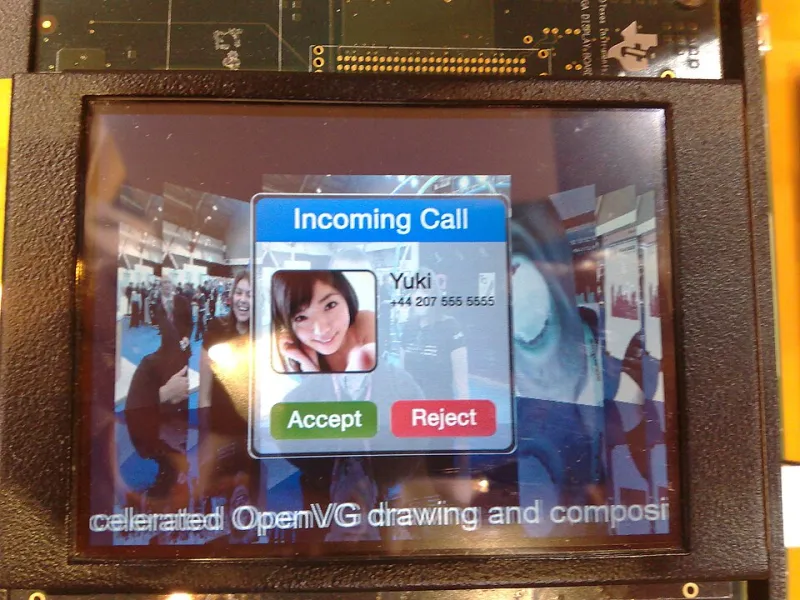
Photo: James Nash (aka Cirrus), CC BY-SA 2.0, via Wikimedia Commons
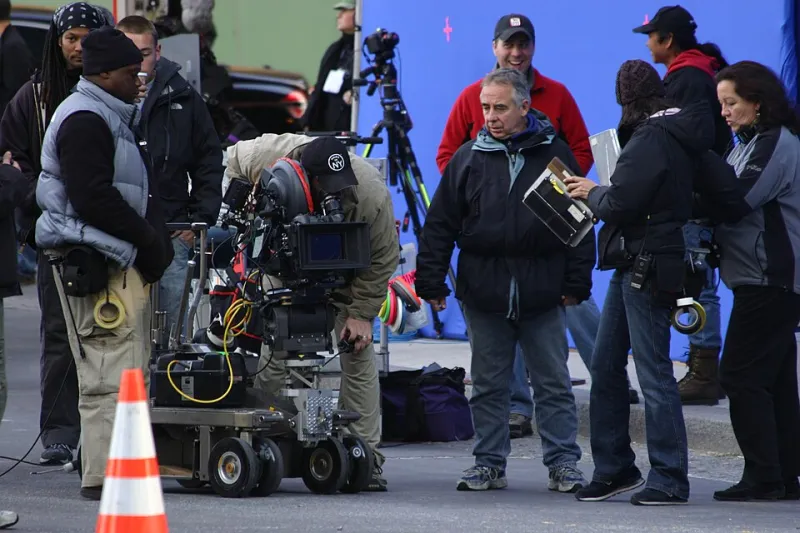
There is a cart on Stage 12 that nobody touches without asking. It's a black rolling case, roughly the size of a carry-on, and inside it are fourteen smartphones labeled with colored tape. Some are hero phones, the ones that get close-ups. Some are stunt phones, the ones that get dropped, thrown, or submerged in a sink. And two are what the crew calls "ghosts"—dead units kept around purely so an actor can hold something with the right weight while a real screen plays back on a monitor two rooms away.
The cart belongs to Marisol Vega, who has a title that didn't exist on most call sheets five years ago: prop-phone graphics lead. She and a rotating team of two to four people are responsible for every pixel that appears on a character's screen in the show's eight-episode order. That means the lock-screen wallpaper, the notification stack, the mislabeled group chat, the weather widget, the step counter, and yes, the battery percentage.
"The battery is the one that gets you," Vega says, tapping a phone awake. "If a scene cuts from a wide to a close-up and the phone goes from 47 to 46, somebody on Reddit will post a screenshot by Thursday. And then my coordinator is on a call explaining why we need a reshoot for a two-second insert."
The department that lives between props and post
On paper, prop-phone graphics sits awkwardly between two traditional departments. The prop master owns the physical device. The post team owns the final image. But the actual screen content—the thing the camera is pointed at—falls into a gap that used to be filled by whoever had the most patience.
In 2026, that gap has become a job. Most scripted shows now run some version of a phone desk, whether it's a dedicated hire or a PA with a design background and a very organized spreadsheet. On bigger productions, the desk is a three-person unit: a designer who builds the fake apps and interfaces, a technician who manages playback and mirroring on set, and a continuity coordinator who logs every screen state take by take.
The work starts long before the first slate. A script that says "Maya scrolls her texts, sees the message from her sister, and freezes" translates into a design brief. What phone model? What operating system? What's the contact photo? How many unread messages are in the thread above the one that matters? Is the phone in dark mode? Has the character had time to charge it since the last scene, which was set the night before?
"We build a fake OS now," says Danny Okafor, a graphics designer who has worked on three streaming dramas this year. "It's not a real phone with a real app. It's a screen recording we own, laid onto a template, with layers we can adjust fast. That way when the director says, 'Can she have one more unread text?' we're not rebuilding anything. We're toggling a layer."
Why the reset is the whole job
Between setups, the phone goes back to Vega or her technician. It gets wiped, reloaded, and reset to the exact state required for the next take. The color-taped label tells you which scene and which episode. The spreadsheet tells you which version of the interface, because the show's fictional app got a redesign in episode five and the finale flashes back to episode two.
On a good day, a reset takes ninety seconds. On a bad day, it takes forty minutes, because the actor improvised a notification sound, or the director decided the phone should ring instead of buzz, or the sun moved and now the screen is unreadable at the angle the camera needs.
"The reset is the invisible labor," says Priya Raman, a first AD who has worked with three phone desks in the past two years. "You don't see it on screen. You see it in the schedule. If the phone desk isn't ready, we're standing around. And with day rates where they are, standing around for twenty minutes is real money."
The money part explains why the desk exists at all. A half-day of reshoots on a single close-up insert can run into five figures once you add crew, location, and the actor's availability. A missed battery icon isn't an aesthetic problem. It's a line item.
The trickle-down of a detail-obsessed audience
What changed in 2026 isn't that audiences got pickier. They were always picky. What changed is the freeze-frame economy. Clip channels, reaction accounts, and frame-by-frame breakdowns have turned background details into content. A fake Instagram handle that's legible for six frames becomes a meme. A wrong timestamp becomes a plot-hole video with 400,000 views.
So the phone desk now gets notes from above the line. Showrunners ask for specific notification stacks to seed future episodes. Writers ask whether a character's phone can show a calendar reminder that pays off in the finale. Editors ask for screen plates they can drop into the cut.
"We're basically writing with props at this point," Vega says. "The phone is a character. It has a mood, a history, a battery level that tells you how the day is going. If we get it right, nobody notices. If we get it wrong, everybody notices."
By the end of the week, the cart is packed, the spreadsheet is closed, and the phones are wiped and stored in a locked drawer. Vega's team will be back in ten days for the next block. The ghosts will still be ghosts. The battery icons will start at 47 percent, because that's what the script says, and because somewhere out there, someone is going to pause the frame and check.