The 30-Second Handoff: How 2026 Sets Are Shooting for the Recap Before the Episode
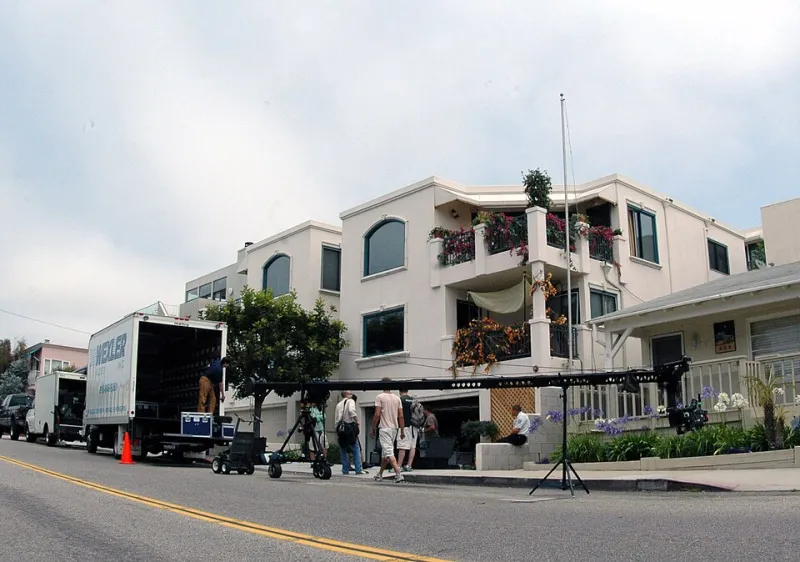
Photo: Don Ramey Logan, CC BY-SA 3.0, via Wikimedia Commons
The first thing a lot of viewers see in 2026 is not the episode. It is the handoff: a 30-second recap that autoplays before the title card, skips itself if you blink, and has to work for someone who watched last week, someone who watched last season, and someone who just wandered in from the home screen. That used to be an edit-room afterthought. Now it is a production job with its own shot list.
The Recap Desk Has a Call Sheet
On a Burbank soundstage in October, a second-unit crew spent a Tuesday morning shooting what the call sheet called “modular story beats.” No one said the word “recap” out loud until lunch. The scenes were small: a character answering a phone, a reveal reaction held a beat longer than normal, a two-shot that restates who trusts whom without saying it. Each setup had an alternate clean take with no overlap dialogue, no music cue baked in, and enough visual information to stand alone between a streaming service’s logo and the episode’s cold open.
“We are not shooting a trailer,” said Maya Reston, a recap editor who has spent the last three years cutting intros for drama and reality series. “A trailer sells a feeling. A recap has to sell the fact that you already care. That is a different grammar.” Reston’s desk is now part of preproduction. She reads scripts before the first location scout and flags moments that will survive a 12-second trim. Her notes go to the first AD, the editor, and sometimes the writer’s room. The goal is not to spoil the episode. It is to make the previous episode legible in a hurry.
The Scene That Has to Work Twice
The tension shows up on set. Directors build scenes for momentum inside an episode; recap-first shooting asks for moments that can be lifted out and still make sense. A confession that lands because of 40 minutes of buildup may be useless in a 30-second intro. A quieter beat—someone sliding a key across a table, a name spoken with the right hesitation—can do more work.
“You start writing for the exit,” said one second-unit director, who asked not to be named because his show is still in post. “Not every scene, but the ones you know will be harvested. You give the actor a clean version. You give the editor a reaction without a hand in frame. You protect the wide. It is not cynical. It is just another deliverable.”
That deliverable has a name in production offices: the recap-eligible moment. It is not a new idea—shows have long shot extra coverage for promos and international cuts—but 2026 has made it routine. Streaming platforms autoplay recaps aggressively, and producers can see what happens when viewers hit skip. A recap that re-establishes relationships too slowly loses people before the episode starts. A recap that overpromises action can make a quiet character episode feel like a bait-and-switch.
The Editor in the Middle
Reston’s week starts with a “recap pass” on the locked cut. She watches the episode once for story, once for reusable images, and once with the sound off. Then she builds a 30-second version in a separate timeline. The rules are practical: name the stakes, avoid dependent pronouns, use at least one face the audience already knows, and do not end on a question the episode answers in the first two minutes. She also keeps a library of “clean” moments—shots with no temporary score, no on-screen text, no actor looking directly at a mark.
“The hardest part is not the cut,” she said. “It is the note that says, ‘Can we make it feel like the episode?’ No. The recap is not the episode. It is the usher at the door. If the usher starts telling you the plot, you stop trusting the usher.”
Producers describe a similar split. Writers worry that recap-first thinking flattens ambiguity. Editors worry that the best scene in the episode is often the worst scene in the recap. Second-unit crews worry about time. A modular beat can add 20 minutes to a shooting day, and that adds up across eight episodes. The compromise, on the shows that handle it well, is a short list: three to five recap-eligible moments per episode, flagged early, shot with alternate coverage, and handed to post with clear notes about what can be reused.
The Highlight Reel Problem
The creative risk is real. A show that starts designing itself for the 30-second handoff can begin to look like a series of highlights waiting to be clipped. Characters explain themselves a little too cleanly. Stakes get restated at the top of scenes. The episode becomes a container for moments that will travel.
But the crews doing this work say the opposite can also be true. When a recap editor is in the room early, the episode gets cleaner. Redundant exposition gets caught. Visual storytelling gets prioritized. Actors get a chance to play the quiet reaction that the main unit might not have time for. The recap becomes a stress test: if the story cannot survive a 30-second summary, maybe the story is carrying too much dead weight.
“Nobody wants to shoot the Wikipedia page,” Reston said. “But if the Wikipedia page is wrong, you have a bigger problem. The recap just makes the problem visible sooner.”
On the Burbank stage, the crew wrapped the modular beats before noon and moved on to the episode’s actual work. The recap editor would get the files that night. The second-unit director would get a note about a reaction shot that held two frames too long for the intro but was perfect for the episode. Both notes were true. That is the new normal in 2026: the story and the handoff, shot on the same day, arguing politely in the same folder.